
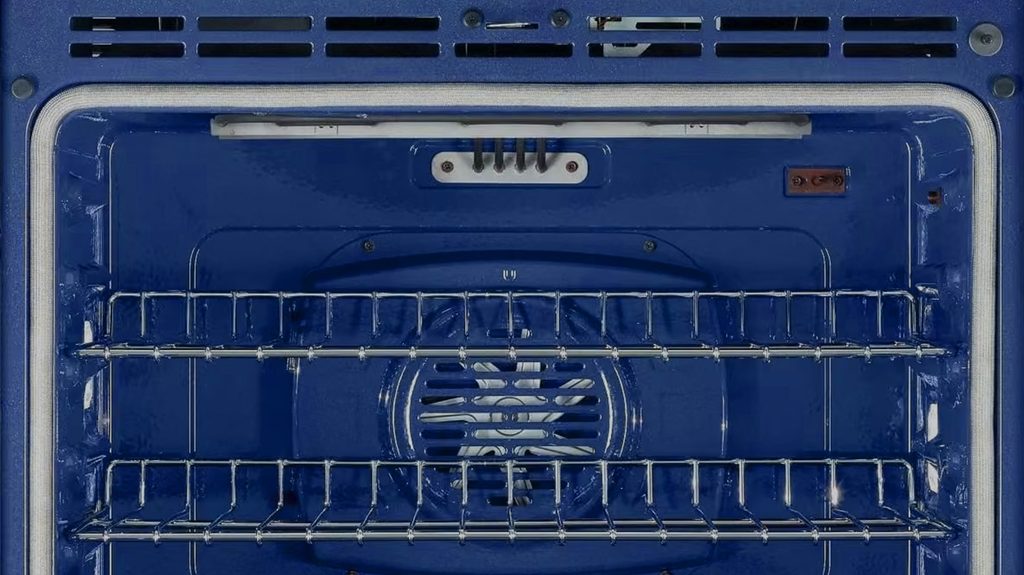
If you’ve shopped for a new range or wall oven recently, you’ve probably noticed that almost every model claims to offer convection cooking. It sounds like a simple feature: a fan moves hot air around your food instead of letting it sit still, which usually means faster cook times, more even browning, and the ability to use multiple racks at once without constantly rotating pans.
Here’s what most homeowners don’t realize until they’re standing in a showroom comparing brands: convection can mean very different things depending on who makes the oven. Some systems circulate leftover heat with a single fan. Others generate heat right where the fan is. Some push air from the corners instead of the center, and a few are built specifically to spread heat evenly across every rack in the oven. Not all types of convection ovens are created equal, and understanding the difference can save you from a lot of guesswork in the kitchen.
Why “Convection” Doesn’t Mean Just One Thing
This confusion comes up constantly with our clients. Two ovens can both say “convection” right on the spec sheet and still bake completely differently, simply because they’re built around different types of convection technology. One might struggle to brown the back corner of a sheet pan evenly, while another handles three racks of cookies at once without a second thought. The word on the box doesn’t tell you which one you’re getting.
Let’s walk through the main types of convection ovens you’ll come across while shopping, how each one actually works, and what that means for your day-to-day cooking.
True European Convection: The Gold Standard
How True Convection Works
When people talk about the most reliable of all convection oven types, they’re usually describing true European convection, sometimes just called true convection. This system uses a fan at the back of the oven paired with a dedicated third heating element built right around that fan. That’s the key difference: the heat isn’t borrowed from your regular bake and broil elements. It’s generated at the fan itself and circulated throughout the entire cavity.
Who Benefits Most From True Convection
Brands like Bosch, Thermador, and Miele build their true convection mode around this approach, and it’s one of the reasons their ovens are known for such consistent results. Because heat is created and distributed from the same source, true convection is especially effective when you’re baking cookies, pastries, or other individual items across multiple racks at once. You get the same golden color and texture on the top rack as you do on the bottom, without needing to swap pans halfway through.
For a serious home baker or anyone who entertains often, this is the convection oven type that tends to deliver the most predictable results, batch after batch. Think of it this way: with true convection, the oven is essentially designed around the fan rather than the fan being added on as an afterthought. If you bake often, host holiday dinners, or simply want one less variable to worry about while cooking, true convection is usually the type of convection oven worth prioritizing.
Corner Column Convection: Wolf’s Dual VertiFlow Approach
How Corner Column Convection Works
Not every high-performance oven relies on a single central fan. Wolf takes a different approach with what it calls Dual VertiFlow, a corner column convection system. Instead of one fan at the back wall, this design uses two vertical fans positioned in the back corners of the oven, with heating elements running alongside them.
Because air is pushed in from the sides rather than from the center, heat fills the oven more completely from top to bottom and side to side. In practice, that means you can cook on every rack at the same time with far more consistent results, and much less need to rotate your pots and pans partway through cooking. If you’ve ever pulled a sheet pan out of the oven only to find the back corner underdone, this is the kind of system built to solve exactly that problem.
Who Benefits Most From Corner Column Convection
Among the various convection oven types on the market, corner column convection is a great fit for households that regularly cook multiple dishes at once, whether that’s a holiday dinner with several sides or a weeknight meal where the roast and the vegetables need to finish together. It’s also a good match for anyone who entertains often and needs an oven that performs consistently under a full load, not just when it’s cooking one dish at a time.
Wolf’s Dual VertiFlow system is a good example of how thoughtful engineering can push a convection oven type well beyond the basics. Rather than treating corner column convection as a minor upgrade, Wolf builds it into the core of how the oven heats, which is part of why it shows up so often in professional-style ranges.
Basic Fan-Assisted Convection: The Simplest Version
How Fan-Assisted Convection Works
The most common and most basic of the convection oven types is fan-assisted convection, sometimes labeled fan bake or just convection on the dial. This system uses a fan to circulate heat that’s already being produced by your oven’s regular bake and broil elements. There’s no dedicated heating element built for the fan itself. It’s simply moving the existing heat around the cavity.
You’ll find this type of convection on many gas ranges and on lower to mid-range electric ovens. It does improve evenness compared to a standard, non-convection oven, and it’s a genuine step up if you’re upgrading from an older appliance. That said, it doesn’t deliver the same level of consistency as systems that generate heat specifically for the fan, like true convection or corner column convection.
What to Expect From Fan-Assisted Convection
Fan-assisted convection is a fine option for everyday cooking, but if multi-rack baking or professional-level evenness is a priority for you, it’s worth understanding that this is the entry point among convection oven types, not the top of the range. If your current oven only offers fan-assisted convection and you’ve noticed uneven browning between racks, that’s usually the reason why, and it’s a common motivator for clients who come to us ready to upgrade.
How the Three Systems Compare in Real Cooking
Comparing Heat Generation and Coverage
When you put the three systems side by side, the differences come down to where the heat is generated and how completely it fills the oven. True convection creates heat directly at the fan, which makes it excellent for delicate, multi-rack baking. Corner column convection spreads that heat from two points instead of one, which is ideal when you’re cooking several dishes on different racks at the same time. Basic fan-assisted convection simply reuses your oven’s existing heat, which helps evenness but has a lower ceiling for consistency.
None of these types of convection ovens is inherently “wrong.” The right choice really depends on how you cook. A household that bakes constantly may lean toward true convection, since it’s designed around the same kind of multi-rack precision that professional bakeries rely on. A family that regularly fills every rack for a big meal might prefer the corner column approach, since Dual VertiFlow and similar systems are built to handle a full oven without hot spots. And a straightforward upgrade from a standard oven can still benefit meaningfully from basic fan-assisted convection, even if it’s not the most advanced of the convection oven types.
Comparing Consistency and Forgiveness
It also helps to think about how forgiving each system is. True convection and corner column convection both tend to produce similar results rack to rack, which takes some of the guesswork out of timing. Fan-assisted convection still requires a bit more attention, since the heat isn’t perfectly uniform throughout the cavity even with the fan running.
Choosing the Right Convection System for Your Kitchen
Ask the Right Question While Shopping
When you’re shopping for a new range or wall oven, it’s worth asking specifically which of these convection oven types the model actually uses, rather than assuming that “convection” on the spec sheet means the same thing across brands. The answer can shape how your kitchen performs for years to come, especially if you love to bake, host, or cook for a big family.
Bringing It Together in Your Kitchen
This is exactly the kind of decision that’s easier to make in person than from a spec sheet online. Here in San Francisco and across Marin County, many of our clients are remodeling a kitchen or upgrading from a builder-grade oven, and the difference between convection oven types is one of the first things they want to see and feel for themselves, not just read about.
If you’re planning a full kitchen remodel, this is also a good moment to think about how your new range or wall oven fits into the bigger picture, alongside your cooktop, ventilation, and cabinetry. Our team walks San Francisco and Marin County homeowners through that whole decision, not just the oven itself, so the type of convection oven you choose actually fits how your kitchen will be used day to day.
Come Experience Convection Ovens at BSC Culinary
The right convection system can make everyday cooking more consistent and take a lot of the guesswork out of baking. Rather than comparing specs on a screen, the best way to understand how true convection, corner column convection, and fan-assisted convection actually differ is to see them in action.
Ready to see it for yourself? Visit our San Francisco showroom to experience these convection oven types in person, or schedule a consultation with our team. Proudly serving San Francisco and Marin County, BSC Culinary is here to help you find the perfect fit for your kitchen.
Watch our video: The Truth About Convection
BSC Culinary: Appliances that make every meal feel a little more special.