
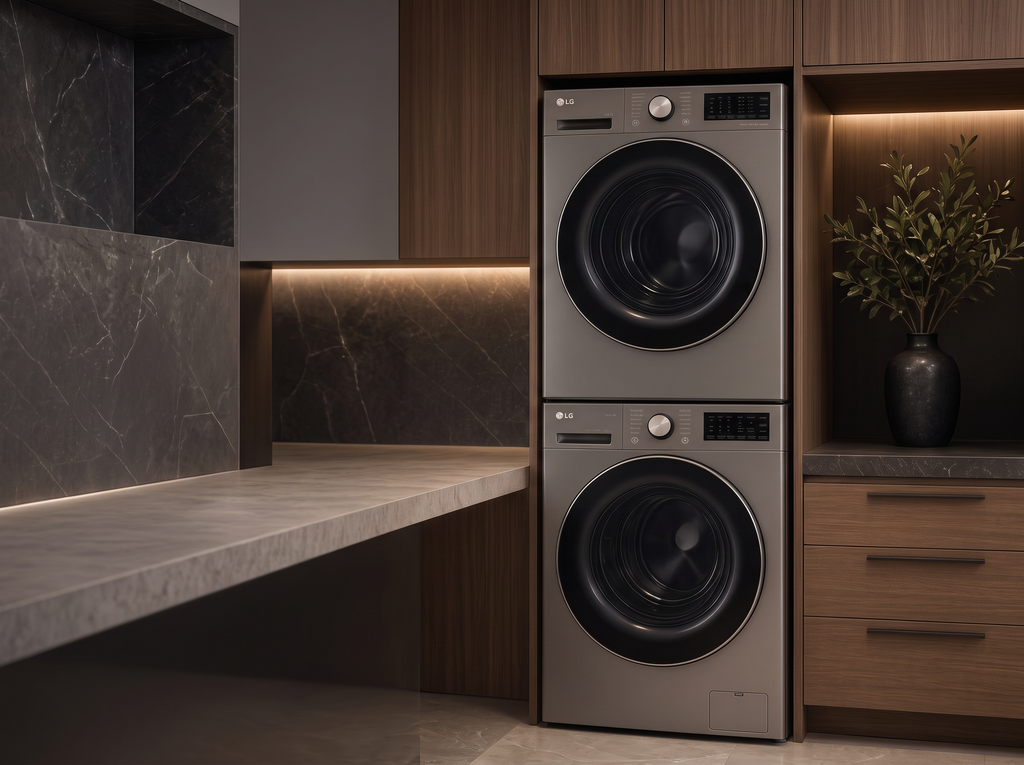
Buying a new washer and dryer set sounds simple until you’re standing in front of 40 different models, each one promising cleaner clothes and lower bills. It’s easy to fall back on brand name, color, or one flashy feature, and that’s usually where regret starts.
The good news: only a handful of things really decide whether a laundry pair works for your home. Get these six right and you’ll end up with a washer and dryer set that fits your space, keeps up with your household, trims your utility bills, and lasts for years. Here’s how we walk San Francisco and Marin homeowners through the decision.
Start With the Tape Measure, Not the Brochure
Before you fall for a feature list, grab a tape measure. This is the step almost everyone rushes, and it causes more headaches than any other.
Measure the spot where the machines will live: width, depth, and height, plus a few inches of breathing room for hoses, vents, and door swing. Then measure the path the machines have to travel to get there. Front doors, hallways, tight turns, and staircases can stop a delivery cold, even when the laundry room itself is roomy.
Width is where most decisions get made:
- Full-size front loaders typically run about 27 inches wide.
- Compact European-style models are usually about 24 inches wide.
Three inches doesn’t sound like much, but in a laundry closet it can be the difference between a perfect fit and a return trip. Here in San Francisco, we see it all the time: narrow Victorian stairwells, condo laundry closets, and compact ADUs where a 24-inch washer and dryer set is the smarter, more comfortable choice.
Finding Your Laundry Sweet Spot: Capacity by Household
Once you know what fits, think about how much laundry you actually do. Capacity is measured in cubic feet, and getting it right is the most important call you’ll make. Too small and you’re running extra loads all week. Too big and you’re paying for space you never use.
Here’s a simple starting point for choosing your washer’s capacity.
1 to 2 People: 3.5 to 4.5 Cubic Feet
For singles, couples, and smaller households, a washer in the 3.5 to 4.5 cubic foot range handles everyday loads with ease. It’s also a natural fit for compact apartments and ADUs, where every inch counts.
3 to 4 People: 4.5 to 5.5 Cubic Feet
Growing families go through a lot more laundry. A washer in the 4.5 to 5.5 cubic foot range lets you wash bigger loads and run fewer cycles each week.
Lots of Bulky Items: 5 Cubic Feet or Larger
If you wash king-size comforters at home or go through a mountain of towels and sports gear every week, go for at least 5 cubic feet. Those items need room to tumble freely to come out truly clean.
One more tip: match the dryer to the washer. A washer and dryer set works as a team, and if the dryer is undersized, it becomes the bottleneck, with wet loads waiting in line while it catches up.
Stacked or Side by Side? Making the Most of Your Floor Plan
Next, decide how the pair will sit in your space. This choice is closely tied to front load vs top load, which we’ll get to in a moment.
Stacking. Front-load washers and dryers are designed to stack cleanly with a stacking kit, a simple bracket that secures the dryer on top of the washer. A stackable washer and dryer gives you the full capacity of both machines while using only one footprint. It’s the go-to setup for apartments, laundry closets, and modern homes where every square foot counts. In San Francisco condos and Marin cottages alike, a stackable washer and dryer can free up room for a utility sink, a folding counter, or extra storage.
Side by side. Top-load washers generally can’t be stacked, so the dryer has to sit next to the washer. That means you’ll need roughly twice the floor width. Some people add a shelf or cabinet above a top loader, which is handy for detergent and linens, but it’s not safe to place a dryer up there the way you can with front loaders.
If you have the floor space, side by side gives you a counter-height surface for folding. If you don’t, a stackable washer and dryer set is hard to beat.
Front Load vs Top Load: The Decision That Shapes Everything Else
The front load vs top load question is one of the biggest you’ll face, because it affects cleaning, efficiency, layout, and comfort all at once.
Why front loaders win for most homes:
- Better everyday cleaning. Front loaders tumble clothes through a small amount of water, which tends to do a better job on everyday dirt and stains.
- Less water and energy. They use significantly less of both on every load.
- Faster spin speeds. Clothes come out drier, so your dryer runs shorter cycles.
- They stack. That opens up all the space-saving options above.
The main trade-off is bending down to load and unload. If that’s a concern, pedestals help. These are raised drawers that sit under each machine, lifting the doors to a more comfortable height and adding handy storage at the same time.
Why some people still prefer top loaders: they’re easy to load without bending, and they’re usually simpler machines with fewer settings to learn.
For most modern homes, though, the front load vs top load debate tips toward front load. A good front-load washer and dryer set is usually the better long-term investment.
The Real Price Tag: Efficiency and Cost of Ownership
The sticker price is only part of the story. Over 10 or more years, what a washer and dryer set costs to run can matter just as much.
Start with the Energy Star label, which tells you a model meets the efficiency standards set by the U.S. EPA. Then check two numbers on washers. They sound technical, but they’re easy to read once you know the trick:
- IMEF (Integrated Modified Energy Factor): a measure of energy efficiency. Higher is better.
- IWF (Integrated Water Factor): how much water the washer uses per cubic foot of laundry. Lower is better.
A high-efficiency front loader can use roughly half the water of an older top loader, and its faster spin leaves clothes much drier. That means less time in the dryer and real savings on your utility bills, especially for busy households running several loads a week.
On the dryer side, a heat pump dryer is the efficiency standout. Instead of heating fresh air and sending it outside, a heat pump dryer recycles warm air in a closed loop, so it uses significantly less electricity than a conventional electric dryer and doesn’t need a vent at all. It costs more up front and runs a little slower, but for energy-conscious homeowners, it pays off over time.
Vented, Ventless, Gas or Electric? Getting the Dryer Right
Dryers come in a few flavors, and the right one depends on how your home is set up.
Vented dryers push hot, moist air outside through a duct. They’re faster, but they need a proper exterior vent.
Ventless dryers, including the heat pump dryer, don’t need a duct to the outside. They’re slower, but they’re far more flexible to install and more energy efficient. That makes a heat pump dryer a great match for many San Francisco apartments and older buildings, where running a new vent through an exterior wall can be difficult, costly, or simply not allowed by building or HOA rules. It’s also ideal for laundry closets tucked inside the living space.
Gas or electric? If your home already has a gas line, a gas dryer is usually cheaper to run. Electric is simpler to install, since it only needs the right outlet.
Whatever you choose, remember the rule from earlier: match the dryer’s capacity to the washer so your washer and dryer set stays in sync.
Features Worth Paying For (and a Few You Can Skip)
Modern machines come loaded with settings, but not every feature earns its keep. These are the ones that make a real difference day to day:
- Moisture sensors. The dryer senses when clothes are dry and stops, so it doesn’t over-dry and wear out your fabrics.
- High-speed spin. More water comes out in the washer, which shortens drying time.
- Steam or sanitize cycles. Great for towels, bedding, and anyone dealing with allergies.
- Auto-dosing. Found on premium models, this feature stores detergent and dispenses the right amount for each load, cutting waste and guesswork.
- Quiet operation. Worth prioritizing if your laundry sits near a bedroom, home office, or living area, which is common in compact Bay Area homes.
- Wi-Fi. Nice to have for cycle alerts on your phone, but not essential.
Our advice: pick the two or three features you’ll actually use every week and focus your budget there. The best washer and dryer set is the one that fits your routine, not the one with the longest feature list.
Built to Last: Hygiene, Build Quality and Long-Term Support
If you’re considering higher-end machines, look past the control panel to how they’re built.
Hygiene. Advanced door seals, such as stainless steel designs in place of traditional rubber gaskets, dramatically reduce mold and bacteria growth. If you’ve ever dealt with a musty front loader, you’ll appreciate this one.
Build quality. Solid construction, high spin speeds, and good vibration control make the real difference over time. Better vibration control also means a quieter washer and dryer set, which matters even more in a stacked setup or an upstairs laundry room. A heat pump dryer is also gentler on clothes, and some European brands, Miele among them, test their machines to simulate 10 to 20 years of real household use.
Service and support. A great machine is only as good as the people who can fix it. Before you buy:
- Confirm that local service is available in your area.
- Review the warranty length and exactly what’s covered.
- Look at independent reliability data, not just brand marketing.
- Be cautious with no-name brands. They can get expensive when they need parts or repairs.
Buying from a local showroom with established brand relationships makes this part much easier.
See Your Next Washer and Dryer Set in Person at BSC Culinary
The right washer and dryer set fits your space, handles your laundry volume, runs efficiently, and has the features you’ll actually use. Measure first, choose wisely, and buy once.
Ready to see your options up close? Visit our San Francisco showroom to compare front-load, stackable, and heat pump models in person, or schedule a consultation with our team. We’ll help you sort through capacity, layout, and features so you can choose with confidence. Proudly serving San Francisco and Marin County, BSC Culinary is here to help you find the perfect washer and dryer set for your home.
Watch our video: What to Look for When Buying a Washer & Dryer
BSC Culinary: Appliances that make every meal feel a little more special.