
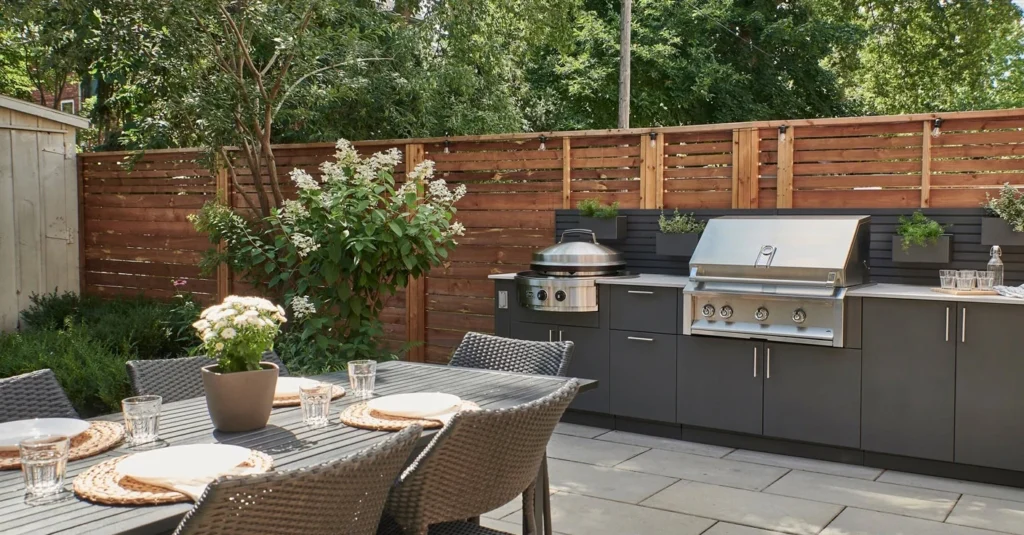
Most outdoor kitchens look great in photos. Far fewer of them are a pleasure to actually cook in.
The difference rarely comes down to the appliances or the materials. It comes down to whether the kitchen was designed around how people actually cook and entertain, or whether it was designed around how it would look. The two outcomes are very different, and the gap between them is felt every single time you step outside to cook.
At BSC Culinary, we help homeowners think through outdoor kitchen design regularly. The questions that matter most are not about finishes or brands. They are about how the space will be used. Here is how to think through it correctly from the start.
Start With the Right Questions
This is the step most people skip, and it is the most important one. Before you choose a single appliance or material, answer these honestly:
How often do you entertain, and for how many people? A kitchen designed for weekly family dinners looks very different from one designed for frequent parties of twenty or more.
What is the primary purpose of this kitchen? Will it function as a complete outdoor cooking destination, or more as a grilling station that supplements your indoor kitchen?
How many people will realistically be cooking at the same time? If two people regularly cook together, you need more counter space, better clearance, and a wider layout than a kitchen designed for one cook working alone.
Will most prep happen indoors or outdoors? If you want to avoid constantly running back and forth, refrigeration, prep space, and a sink need to be part of the outdoor setup from the start.
How do you want guests to interact with the space? Some homeowners love having guests at the counter while they cook. Others prefer a clear separation between the cooking zone and the seating area.
Your answers to these questions will shape every decision that follows.
Think in Zones
The most functional outdoor kitchens are organized around four distinct zones. When these are properly planned and arranged relative to each other, cooking outside becomes genuinely enjoyable rather than an exercise in logistics.
The Hot Zone: This is where the grill, pizza oven, and any other high-heat appliances live. It should have generous clearance on all sides so the cook has room to work comfortably without feeling cramped around an open flame.
The Wet Zone: The sink and prep area. This is where you wash produce, clean up, and handle anything that involves water. It should be easy to reach from both the hot zone and the cold zone without requiring the cook to cross through an active cooking area.
The Cold Zone: Outdoor refrigerators, beverage centers, and ice makers. Keeping cold storage close to the cooking and prep areas means you stop running inside for drinks and ingredients, which is one of the most common complaints about kitchens that were not designed with this zone in mind.
The Dry Zone: Storage and serving. Plates, utensils, dry goods, and plating space all belong here. Having a dedicated place to stage food before it goes to guests prevents the counter clutter that makes a kitchen feel chaotic during service.
When these zones are clearly defined and positioned with the cook’s movement in mind, the kitchen flows. When they are not, even a beautifully equipped outdoor space becomes frustrating to work in.
Counter Space and Landing Zones Matter More Than Most People Realize
One of the most consistent mistakes in outdoor kitchen design is underestimating how much counter space is actually needed.
A kitchen with almost no workspace forces the cook to shuffle constantly, set hot food on the ground, and discourages anyone else from helping. Cooking becomes a cramped, solo experience.
A kitchen with real working room, a dedicated landing zone directly beside the grill for food coming off the heat, and enough space for a second person to assist without getting in the way, feels entirely different to cook in.
The rule of thumb: always plan for more counter space than you think you need. Extra depth and smart storage make a kitchen feel dramatically more functional, and you will use every inch of it once you start cooking seriously outdoors.
Satellite Kitchen or Independent Kitchen?
This is one of the most important structural decisions in the planning process.
A satellite kitchen is a cooking extension of your indoor space. It is simpler and more affordable, but it relies on the indoor kitchen for most prep, storage, and cleanup. You do the majority of food preparation inside, then bring everything outdoors to grill and serve. This works well for homeowners who cook outside occasionally and want a clean, capable grilling setup without a major investment.
An independent kitchen is designed to stand entirely on its own. It has full counter space, adequate storage, refrigeration, a sink, and the utilities to cook and entertain completely outdoors without going inside. These kitchens tend to cost more and require more space, but they become a genuine destination in the backyard, not just an accessory to the home.
The right choice depends entirely on how you intend to use the space on a regular basis.
Appliances: Choose What You Will Actually Use
Outdoor cooking has expanded well beyond the grill, and the range of specialized equipment available today is genuinely impressive. Pizza ovens, flat-top cooktops, smokers, kamados, Argentinian gaucho-style grills: the options are extensive.
Some brands worth knowing in this space:
Lynx brings a long history of professional-grade grilling with their Trident infrared burner technology, flat-top Asado cooktops, and the Napoli outdoor oven.
Kalamazoo sits at the top of the luxury outdoor kitchen category with highly custom, chef-driven designs that go well beyond a standard grill station.
Alfresco and Fire Magic are established names with strong reputations for build quality and cooking performance.
Gozney has built a following for their pizza ovens, which have genuinely raised the bar for what a home pizza oven can produce.
The most important principle here is not to collect every appliance that looks appealing. Choose the ones that match how you actually cook. A rotisserie is only valuable if you use it. A pizza oven is only valuable if you bake pizza. Be honest about your cooking habits, and design the kitchen around those, not around what makes for an impressive spec list.
Cabinetry: The Frame That Holds It All Together
The cabinetry is what gives an outdoor kitchen its structure, durability, and visual character. A few brands are redefining what is possible in this category.
Urban Bonfire offers fully custom, high-end modular systems built from marine-grade aluminum with clean, modern designs that feel closer to indoor cabinetry than a traditional outdoor kitchen setup. For homeowners who want the outdoor kitchen to feel like a natural visual extension of the home’s interior, Urban Bonfire is one of the strongest options available.
Danver and Brown Jordan bring fully custom stainless steel cabinetry with refined finishes that align more closely with indoor kitchen standards than traditional outdoor materials. They are helping shift expectations of what an outdoor kitchen can look and feel like at a luxury level.
Kalamazoo builds their cabinetry around the same chef-driven philosophy that defines their appliances: extremely custom, extremely intentional, and built for homeowners who are not willing to compromise on any detail.
The Human Experience Is the Design
The best outdoor kitchens are not the ones with the longest appliance list or the most expensive finishes. They are the ones that feel natural to cook and entertain in, where the layout makes sense for how you move, where guests can be close without being in the way, and where the indoor and outdoor spaces feel connected rather than separate.
Start with the right questions. Design for how you actually use the space. Think in zones. And resist the impulse to copy what photographs well on social media. A kitchen that works is always more valuable than one that just looks good.
At BSC Culinary, we carry several of the outdoor brands mentioned here and love helping homeowners think through outdoor kitchen design from the planning stage through appliance selection. If you are building or renovating an outdoor kitchen in the San Francisco area and want guidance on what will actually work for your space, we invite you to visit our showroom or schedule a consultation with our team.
Watch our video: How to Design an Outdoor Kitchen That Actually Works (Most People Get This Wrong)
BSC Culinary: Appliances that make every meal feel a little more special.