
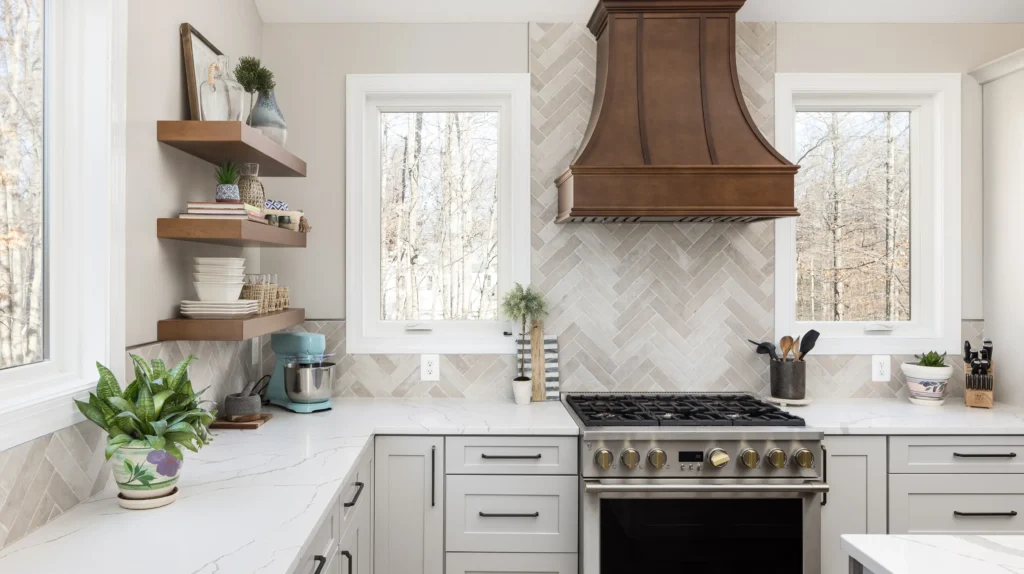
When most people think about a kitchen hood, they picture a stainless steel statement piece that matches the rest of the appliance suite and pulls smoke out of the air. That’s only part of the story. A kitchen hood is not just a design element, it’s a ventilation system. And when it’s not planned properly, it can quietly become one of the biggest missed opportunities in a kitchen.
At BSC Culinary, we see this every day. Let’s break down the details homeowners are rarely told, but absolutely should know, before choosing a kitchen hood.
CFMs Are Not the Whole Story
CFMs, or cubic feet per minute, are often the first number people look at. Higher CFMs sound better, but more power alone does not guarantee better performance.
A hood with high CFMs can still underperform if:
- The hood does not fully cover the cooking surface
- The capture area is too shallow
- The ducting design is inefficient
- The installation is not executed properly
For effective ventilation, the hood should at least match the width of your cooktop and provide enough depth to capture rising heat and smoke. A wider hood often performs better, even at the same airflow rating. For example, a 54-inch hood over a 48-inch range captures more smoke than a hood that matches the range width exactly.
Makeup Air Is Often Overlooked
Once you move beyond 400 CFMs, many local building codes require makeup air. This is replacement air brought into the home to balance what the hood exhausts.
Without makeup air:
- Negative pressure can build up in the home
- Doors may be harder to open
- Combustion appliances may not vent properly
- Indoor air quality can suffer
The biggest issue is that this requirement is often discovered late in the project. That can lead to unexpected HVAC costs and delays. Ventilation planning should involve the hood, the ducting, and the home’s HVAC system working together from the start.
Noise Matters More Than You Think
A powerful hood that sounds like a jet engine changes how your kitchen feels. Noise is one of the most common regrets homeowners share after installation.
Instead of decibels, most hoods are rated in sones, which measure how loud sound feels to the human ear. Lower sones mean quieter operation. Higher sones mean more noticeable noise.
A hood that is too loud often gets used less, which defeats its purpose. Balancing airflow with acceptable noise levels is key, especially in open concept kitchens.
Maintenance Is Not Optional
A hood is only as effective as its internal components. Grease builds up quickly, and dirty filters restrict airflow and increase fire risk.
Monthly cleaning makes a real difference. Most filters fall into these categories:
- Baffle filters
- Mesh filters
- Charcoal filters for ductless systems
Knowing which filter your hood uses and how to clean or replace it keeps performance consistent and protects your kitchen long term.
Ducted vs Ductless: Know the Difference
Ductless, or recirculating, hoods filter air and send it back into the kitchen. Over-the-range microwaves are a common example.
These systems can reduce odors, but they do not remove:
- Heat
- Moisture
- Combustion byproducts
If improving indoor air quality is the goal, especially with gas cooking, a ducted hood vented to the outside is the only truly effective option.
Hoods Are Not One Size Fits All
Ventilation does not have to mean a stainless steel chimney hood. Today’s options allow performance and design to coexist.
Common styles include:
- Under-cabinet hoods
- Downdraft systems
- Ceiling-mounted extractors
- Wall chimney hoods
- Island hoods
Many brands also offer custom solutions, including hood inserts that can be built into cabinetry or decorative metal hoods that become a focal point. This approach allows you to prioritize airflow while maintaining complete design freedom.
Final Planning Tips That Make a Big Difference
A few small decisions during planning can dramatically improve performance:
- Shorter duct runs work better than long ones
- Fewer turns reduce noise and increase efficiency
- Turn the hood on before cooking to establish airflow
- Let the hood run several minutes after cooking to clear lingering heat and moisture
These habits help your hood do its job properly every time you cook.
The Bottom Line
A kitchen hood is not an afterthought. It is a ventilation system that depends on proper sizing, capture area, ducting, noise control, and maintenance to perform the way it should.
When planned correctly, a hood protects your air quality, preserves comfort, and makes cooking more enjoyable. When planned poorly, even the most expensive hood can fall short.
If you’re planning a kitchen or upgrading your ventilation, visit BSC Culinary. Our team helps homeowners and designers choose hoods that balance performance, design, and real-world use, so your kitchen works as beautifully as it looks.
Watch our video: What They Don’t Tell You About Kitchen Hoods
BSC Culinary, thoughtful planning for better kitchens